New Collection: “For the Birds”
April 20, 2026 | author: Erika Carruth
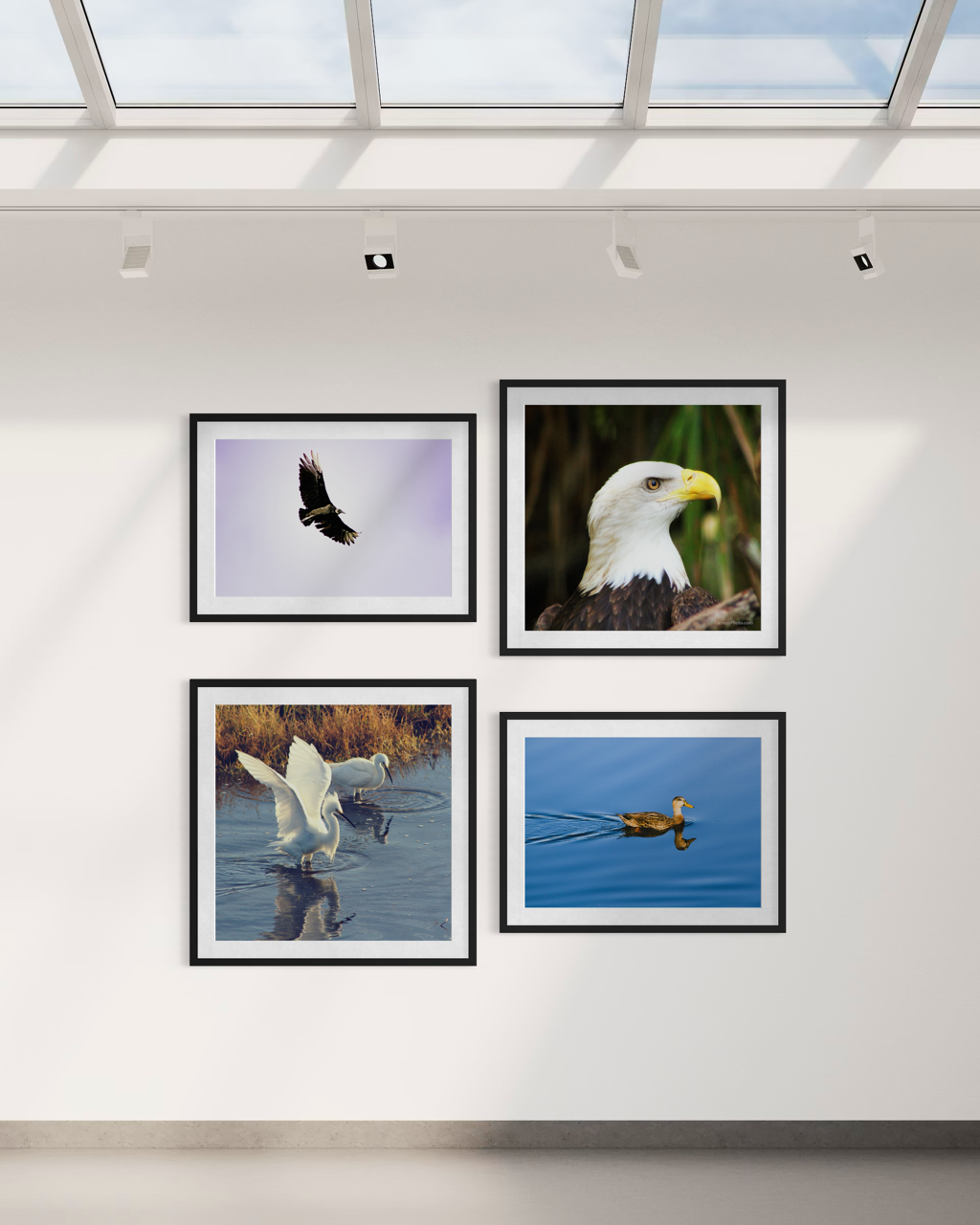
I am not entirely sure when it happened—when birds shifted from background scenery to the focus of my lens.
If I had to guess, it was sometime during the years when life finally allowed me to slow down a little. When the constant rush softened just enough for me to notice what was happening around me in the present moment. Birds, I have come to learn, can inspire us to do that. They reward patience.
There is nothing performative about them. No pretense. No agenda. Like all wildlife, birds are unapologetically themselves—but even more than that, they are undeniably beautiful. For millions of years, birds have possessed a gift that humanity has only recently begun to understand: flight. Humans did not achieve powered flight until 1903, when the Wright brothers made history with the first successful airplane flight. Birds, of course, had already mastered the sky long before we ever dreamed of it.
And it truly is something to witness.
Anyone who has piloted a small aircraft (or simply experienced flight from a quieter vantage point) can appreciate the solitude that exists in open air. There is a calmness to it and a sense of removal from the noise and urgency of daily life. It offers a sense of space and expansiveness like nothing else.
From up there, everything below becomes small—traffic, inboxes, the countless issues that consume our days. From a bird’s-eye view, our circumstances take on a dramatically different scale, and perspective has a way of returning. Birds inhabit that widened perspective every day.
Photographing birds offers its own kind of education. As someone who has spent years photographing both people and wildlife, I have come to deeply appreciate one profound difference: birds have absolutely no ego about being photographed. They have no audience to impress, no expectation to fulfill, no best side to flash to the camera. They are simply existing as they were intended to exist.
In many ways, it is a state of being worth borrowing.
Capturing birds through the lens requires a very particular combination of patience, timing, and technical discipline. Wildlife photography is rarely controlled; it is observational. The photographer must anticipate behavior, read light, adjust focal length, and remain prepared for the split-second moment when composition, motion, and light align. I can tell you from experience, sometimes it can go so well that it feels like you are in a state of flow, while other times it can make you question your skills and abilities.
Photographing birds in flight (often referred to as BIF photography among wildlife photographers) requires acute precision. Long telephoto lenses, continuous autofocus tracking, and fast shutter speeds become desirable tools when attempting to freeze motion against an open sky. That being stated, many of the most meaningful moments happen when nothing dramatic is occurring at all.
A tranquil morning along the waterline.
A bird angled into the early light while searching for food.
A mother bird perched beside her nest.
Young birds learning the delicate choreography of finding worms beneath the soil.
In these moments, the photographer is not chasing the image or motion in flight but simply waiting, and waiting has a way of slowing everything down. For me, that slowing down is one of the most valuable aspects of wildlife photography. It is meditative, and it asks us to be fully present in a way that modern life rarely demands. Any moment that allows us to pause and genuinely appreciate what is around us carries value—not just as artists, but as human beings.
The For the Birds Collection
The new For the Birds photography collection is a reflection of that philosophy.
Many of the photographs were captured over the course of more than a decade. During that time, I have taken thousands of bird photographs in a wide range of environments and conditions—quiet wetlands at sunrise, shoreline habitats, early morning fields, and unexpected encounters in everyday landscapes. From that extensive archive, I have selected a small group of images that I felt carried something unique: compelling light, interesting composition, or a moment of behavior that simply felt authentic.
The idea was not to curate decorative or overly polished images. In fact, quite the opposite. Many of the photographs were never originally taken with the intention of becoming wall art. They were in essence just moments worth observing. Much like the birds themselves, the images in this collection exist without vanity or expectation. They are purely documentation of presence.
A little bit about the process itself… Wildlife photography can be misunderstood as a pursuit of spectacle. In reality, it is more frequently an exercise in stillness. A photographer may wait hours for a single frame – seriously, but when the moment arrives, it makes the waiting worthwhile. Birds teach that lesson over and over again. They remind us that beauty often appears modestly and that the act of patience can be rewarding. And that the natural world continues moving in rhythms far older than the pace of modern life.
Conservation and Appreciation
As with all wildlife photography released through Carruth Photo, a portion of the proceeds from For the Birds will be directed toward organizations dedicated to bird and habitat conservation. Protecting bird populations requires preserving the ecosystems they depend on—wetlands, shorelines, forests, and migratory pathways that span continents. Such conservation efforts ensure that future generations will continue to witness the same special moments of flight and discovery that make bird photography so meaningful. This level of support is just a small way to give something back to the landscapes and wildlife that inspire the work.
A few selected images from For the Birds are now featured on the homepage of the Carruth Photo website. Visitors are invited to explore the collection and inquire about available prints, as well as view additional images. While the photographs may vary from wading birds to raptors on the hunt, they share a common thread: a respect for observation, patience, and the serene beauty of the natural world.
Because sometimes the most extraordinary moments are the ones that ask us to simply slow down, look up, and notice what has been there all along.