September 4, 2026 | author: Erika Carruth
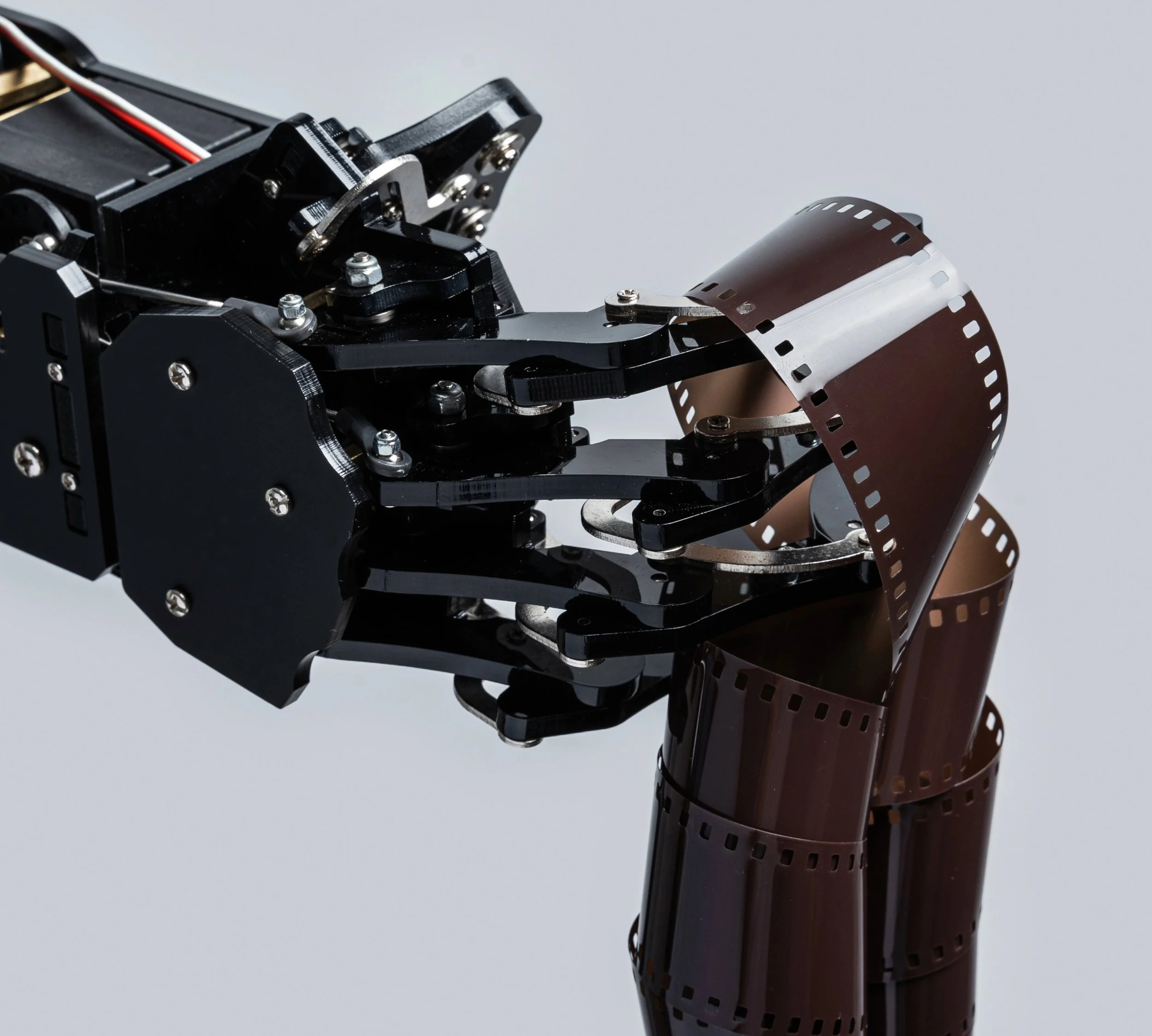
For nearly two centuries, the photograph has carried an implicit covenant: this existed in front of a camera. It was never a perfect promise; the truth is that photographs have always been vulnerable to staging, cropping, manipulation, and selective truth, but the medium’s ontological anchor was stable, and the process was clear: light touched a surface, a moment occurred, something was. Today, that promise appears to be dissolving before our eyes.
Artificial intelligence has introduced quite a quandary for photography; this is not because images have never been falsified before, but because falsification is now frictionless, ubiquitous, and increasingly indistinguishable from the real. The photograph’s evidentiary power is being reconfigured at a speed that outpaces our cultural, psychological, and institutional ability to adapt.
As a photographer whose work is rooted in witnessing the real world, from its inspiring and complex ecosystems to its wildlife and human stories, this shift goes beyond technology and becomes rather existential in nature. Recent analyses indicate that the digital ecosystem is already dominated by synthetic content. In 2026, 79% of images posted to Instagram, TikTok, and Pinterest show detectable AI generation (source: Medium). Furthermore, Europol’s Innovation Lab projects that synthetic content could reach 90% of everything online by the end of 2026(source: Europol). Even the infrastructure of the web is changing: bots now generate 57.5% of all web requests globally, surpassing human activity (aka traffic) for the first time (source: Forbes). In short, this means the average scroll is no longer a window into human lives. It is a kaleidoscope of algorithmic output, images that resemble reality but are not anchored to any physical encounter or place.
Photography’s historical function as proof has been destabilized, and its role as memory is complicated. And more importantly, its role as art is being reinterpreted through a new lens in which human agency is no longer assumed.
What Scholars and Experts Say About AI’s Impact on Art
Across sociology, psychology, and art theory, experts are actively grappling with the implications of AI‑generated imagery and the profound alterations it introduces to creative culture. Research in the Journal of Aesthetics & Culture argues that photorealistic AI images unsettle long‑held assumptions about photography by imitating its visual language without sharing its grounding in physical reality, forcing a reconsideration of what qualifies as photographic art when images no longer need to originate in lived space. Psychologists echo this disruption: a 2026 study in Frontiers in Psychology reports that AI‑generated art violates deeply ingrained cultural “lay theories” of creativity, leaving viewers unable to reconstruct a human generative process and provoking a deep unease about the very nature of the artwork when its origin is ambiguous or nonhuman. Meanwhile, visual culture theorists describe photography as entering a “photo‑philosophical limbo,” a state in which the boundaries between photographic and non‑photographic images have become porous, and the medium’s identity is increasingly defined by its relationship to nonhuman systems rather than its historical foundation in physical reality.
To be fair and balance the scales, there are viewpoints strongly supporting this integration. Some theorists and curators argue that AI expands the field of artistic possibility, offering new modes of abstraction, data‑driven aesthetics, and computational creativity that challenge traditional definitions of authorship in productive ways. Exhibitions such as Sougwen Chung’s Floral Automata and her broader body of work—created through collaboration between the artist and custom‑built robotic systems—demonstrate how machine learning can become a partner in mark‑making rather than a replacement for it. Chung’s practice, which has been featured at the Whitney Museum, reframes AI not as an adversary to human creativity but as a tool capable of extending gesture, repetition, and embodied process into new conceptual territories. In this view, AI is less of a threat to artistic practice and more of a catalyst for reimagining what art can be in a technologically saturated world.
Taken together, the various perspectives converge on a single conclusion: AI is so much more than new technology; it represents a new conceptual framework, one that fundamentally reconfigures how images are made, understood, and believed.
Photography, for Me, Begins Where Algorithms End
Those who know me know that I did not enter photography to create fantasy. I entered it to witness and capture reality, from its textures and colors to its unpredictability and raw splendor. My first cameras were film, which meant that every frame required time and attention. You couldn’t “fix it later.” You couldn’t generate a sky or replace a sunrise with a more flattering one. You had to be present and work with the conditions, lighting, and timing that was available to you in that moment.
That ethos still guides my work today. Whether it’s the first spark of light cresting the horizon, dew gathering on leaves at dawn, storm clouds making way for rainbows, or wildlife moving with complete disregard for human expectations, these moments are unposed and profoundly real; they are the opposite of algorithmic output.
The Human Psyche in an Age of Synthetic Reality
We are entering (or have already entered) a psychological era in which the human mind is becoming accustomed to auto-generated imagery, fantasy that mirrors reality so closely that the distinction becomes irrelevant to many viewers. This habituation has consequences: as synthetic imagery becomes increasingly normalized, we risk losing our intuitive sense of what reality actually looks like. Real beauty may begin to feel muted or insufficient because many AI‑generated visuals we see are engineered for instant dopamine rather than genuine observation. Over time, we may forget how to recognize the extraordinary within the ordinary, and those subtle, unrepeatable moments that define lived experience.
For someone like me—whose objective is to capture the unnoticed beauty of the real world, and to use those images to raise awareness and funds for environmental and humanitarian causes— this moves in a direction fundamentally different from my mission. But the solution, I believe, is simple:
Just keep creating.
I don’t believe that art was ever intended to be a competition. It was never meant to portray unattainable perfection. It was never meant to be faked. Art has always been an expression of human experience, a product of our time, our process, and our presence. And presence cannot be automated.
Where AI Fits—and Where It Doesn’t
I want to be clear about something that often gets lost in conversations around this topic: I fully understand that AI has a legitimate and valuable place in many arenas. Its value across scientific, organizational, and creative domains is undeniable, and its capacity to expand access to visual culture has already been demonstrated by artists such as Refik Anadol, whose data‑driven installations translate natural phenomena into immersive experiences for audiences who might never engage with traditional art forms. AI has also proven itself in business systems, digital organization, and efficiency‑driven workflows. Its trajectory is clear: it will continue to evolve, and many artists who vehemently oppose it today may ultimately find themselves incorporating it into their practice as its capabilities mature.
I have lived through my own version of a similar adjustment: when I was a student at the School of the Museum of Fine Arts, I resisted computer‑based art entirely. At the time, even a paintbrush felt like enough distance between myself and the final work; adding computer technology felt like stepping too far away from what I wanted to express. Yet less than a decade later, I embraced digital photography, digital darkrooms, and the full suite of editing software—hello, Photoshop. That experience taught me that technology’s role in art is never fixed; it changes as the tools advance and as artists discover new ways to use them.
Still, where AI stands now, it simply isn’t a fit for my photography-based work. Much of what I do is rooted in environmental storytelling, sustainability, wildlife protection, humanitarian efforts, and the fragile beauty of the natural world. Introducing AI into that process would create a conceptual distance between what I am trying to connect with and what I am trying to share. For that reason, the artwork and prints you receive from me are not generated by AI, and I do not foresee that changing in the near future. They emerge from direct engagement with the physical world.
And while I cannot control whether my images are scraped by AI models, I can control how I share my work. That is one of the reasons why my social profiles are now private and/or not very active, why full-resolution images are no longer posted publicly, and why I rely on “old school” methods for communication (calls, emails, private galleries, consultations, and curated viewings).
A Changing World, an Unchanged Calling
We are living through a profound and uncertain transformation in how we consume visual media and understand the world. It is not the first time, nor will it be the last, that artists face seismic shifts in technology and culture. But the role of the artist remains unchanged: To witness. To interpret. To create. To care.
AI will continue to expand in its applications, and synthetic imagery will continue to proliferate. The digital world will continue to blur the boundaries between real and unreal; it is just part of the process and how technology and creativity are converging. That being stated, the real world still exists and still needs witnesses, and I hope that artists and creatives across all mediums—photographers, painters, sculptors, writers—will continue to create not because they must compete with machines, but because art is a human necessity.